Salisbury Musick logo
menu

What's On

Please note that Priority Booking runs until the end of May.  During this period anyone can browse events and add them to their basket, but only Friends will be able to purchase them.  You can sign up as a Friend as part of the checkout process.

Your currently selected events will be stored in your browser, and you can come back to this page later to add more.  However, only when you complete your purchase will the tickets be guaranteed.  When only a small number of tickets remain for an event, you will see a warning for this when you view your basket.


Unticketed events: concerts by local musicians in various venues. Free entry with retiring collection.


Ticketed events: talks, walk, concerts by visiting experts and meals.

Hover over the picture for an event to get a precis of the event, and click for further information and to buy tickets for ticketed events. On a mobile device, tap on a picture once for the precis and tap again for further information and tickets. You can use the filter below to limit the events you see, if this is helpful.


Friday 2 October 2026
The Art of the Trio Sonata
10.30–11.15
All Saints’ Church, Whiteparish
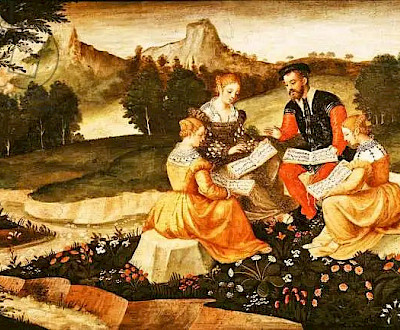
Salisbury Banks Trio perform trio sonatas by a range of composers, including Handel and Telemann. 

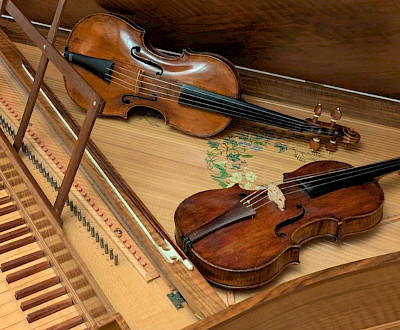
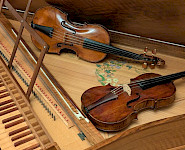
Two violins in a spinet

 The trio sonata is a genre, typically consisting of several movements, with two melody instruments and basso continuo. It originated in the early 17th century and was a favourite chamber ensemble combination in the Baroque era.

Our concert includes trios sonatas by J S Bach, G Finger,  G F Handel and G P Teleman.

The ensemble is named after Benjamin Banks, a famous English violin maker who lived in Salisbury during the 18th Century.

Violins: Shelley Stokes and David Morgan Spinet: David Stokes

This event is unticketed, with free entry and retiring collection for those who would like to make a contribution.

 The trio sonata is a genre, typically consisting of several movements, with two melody instruments and basso continuo. It originated in the early 17th century and was a favourite chamber ensemble combination in the Baroque era.

Our concert includes trios ...

Click here for further details.

English Brass Music
10.30–11.15
United Reformed Church, Salisbury
Young players from Salisbury schools and SAYM present English renaissance and baroque music for brass ensemble.

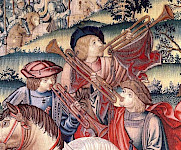
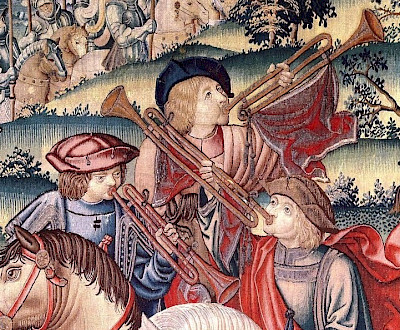
Trumpet players

This 'coffee and cake' concert, in collaboration with Salisbury Area Young Musicians (SAYM), celebrates talented local brass players from Salisbury schools. After the success of last year's Venice to Vienna concert, this year the focus will be on English Renaissance and Baroque music, arranged for brass ensemble. Expect majestic and beautiful sounds from composers including Byrd, Dowland, Purcell, Tallis and Handel.

Directing will be local musician Laurie Truluck, who will also give a demonstration of the origins and development of the natural horn.

Coffee and cake will be served after the concert. 

This event is unticketed, with free entry and retiring collection for those who would like to make a contribution.

This 'coffee and cake' concert, in collaboration with Salisbury Area Young Musicians (SAYM), celebrates talented local brass players from Salisbury schools. After the success of last year's Venice to Vienna concert, this year the focus will be on English Renaissance and ...

Click here for further details.

All Roads Lead to Rome
12.30–13.15
St Thomas's Church
Sarum Baroque explore musical developments from the early 17th century through to Corelli’s trio sonatas in Rome.

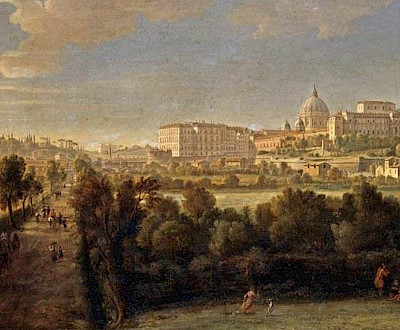
Painting of road to Rome

Sarum Baroque explores the development of the Trio Sonata from its earliest beginnings in C16th Italy, across the Alps to Austria and France , and back to Italy where Corelli in Rome became the acknowledged master of the form. His works influenced most later Baroque composers writing in this genre and it could be said that all roads then led from Rome - but that’s for another concert.

For this programme members of Sarum Baroque are using copies of late renaissance/early baroque strings and recorders.

Violin: Lynn Menzies, Violin and recorder: Miranda Dodd, Bass violin: Hilary Brooks, Organ: Nigel Gardner


Sarum Baroque explores the development of the Trio Sonata from its earliest beginnings in C16th Italy, across the Alps to Austria and France , and back to Italy where Corelli in Rome became the acknowledged master of the form. His ...

Click here for further details.

Hallelujah – Handel’s Messiah in Salisbury
14.30–15.15
The Salisbury Museum
In preparation for our gala concert on Sunday evening, Nigel Wyatt presents a talk about the intriguing history of early performances of Handel’s Messiah in Salisbury in the 18th century.

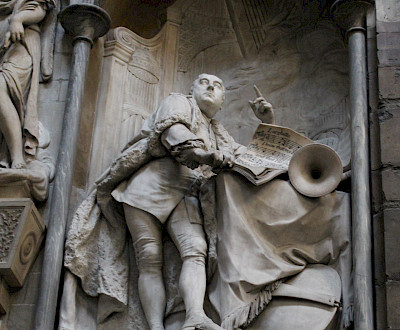
Handel's memorial

In preparation for our gala concert on Sunday evening, Nigel Wyatt presents a talk about the intriguing history of early performances of Handel’s Messiah in Salisbury in the 18th century. We know that one of the of the earliest performances outside London took place here in Salisbury in 1750 as part of the annual music festival. But there are earlier connections between Messiah and Salisbury which the talk will explore. 


In preparation for our gala concert on Sunday evening, Nigel Wyatt presents a talk about the intriguing history of early performances of Handel’s Messiah in Salisbury in the 18th century. We know that one of the of the earliest performances ...

Click here for further details.

Fortepiano Recital: Expressive Style
17.30–18.30
Medieval Hall
Pianist John Reid, former organ scholar and chorister at Salisbury Cathedral, explores music by C. P. E. Bach and others, playing on a copy of a fortepiano of the period.

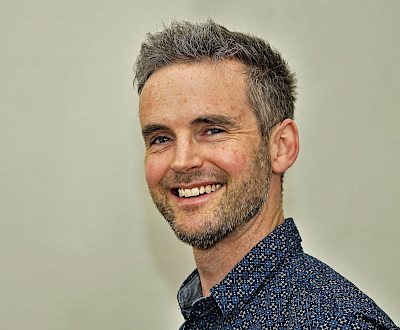
John Reid

Pianist John Reid explores aspects of the Empfindsamer Stil: a radical new musical current of expressivity, emotional fluidity and 'sensibility', championed (among others) by Carl Philipp Emanuel Bach in the mid-eighteenth century. This is music which still surprises and moves us today, in all its quirkiness and complexity. John's programme also includes music by Haydn: the joyful, florid Sonata in A Flat, and the F-minor Variations, considered by many to be his finest, emotionally deepest keyboard work. 


John Reid owes an enormous amount to his early musical education in Salisbury, both as a chorister and as Organ Scholar at the Cathedral; and he is delighted to take part in Salisbury Musick. He is a graduate of Clare College Cambridge and an Associate of the Royal Academy of Music, where he is also a Professor of Chamber Music and Piano. A performer of unusually wide sympathies, he is equally acclaimed as an exponent of contemporary music, as a chamber musician, singers' accompanist and soloist. Recent concert highlights include a UK and European tour of Carnival: a collaboration between Aurora Orchestra and physical theatre group Frantic Assembly, based on Saint-Saens's Carnival of the Animals; Mahler's Das Lied von der Erde at the Oxford International Song Festival (with singers Daniel Norman and Jess Dandy); and the first performance of Julian Anderson's Life Cycle, concerts to explore the chamber music of Salvatore Sciarrino and to mark the centenary of Hungarian composer Gyorgy Kurtag - all with Birmingham Contemporary Music Group. He continues to explore Classical and Romantic repertoire on period instruments with violinist Sophia Prodanova and violinist-violist John Crockatt, and he contributed three times to the complete cycle of Mozart piano concertos at Kings Place in London. 

www.johnreidpiano.com


Fortepiano

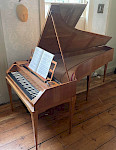
John will be playing on a fortepiano which is a copy of Mozart’s own Walter made in the late 1980s by Paul McNulty for Trevor Pinnick.  Walter was the most famous piano maker in Vienna in the late eighteenth century. Mozart owned and regularly used one of his instruments which were known for their bright, clear tone.  


Tickets for this event are £20, or £2 for any child under 18. Multi-buy discounts apply to online purchases of tickets for the concerts by visiting professionals, with tickets for 4 events at £65, or all 5 events for £80, when purchased at the same time.

Pianist John Reid explores aspects of the Empfindsamer Stil: a radical new musical current of expressivity, emotional fluidity and 'sensibility', championed (among others) by Carl Philipp Emanuel Bach in the mid-eighteenth century. This is music which still surprises and moves us today, in ...

Click here for further details.

Meal at the Rifleman's Table - Friday
18.45–19.45
Rifleman's Table, The Close, Salisbury
Book a 2-course meal at the Rifleman's Table café


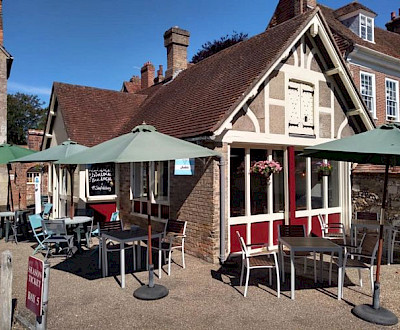
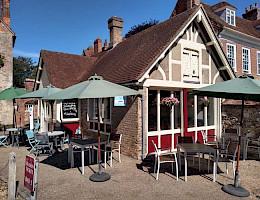
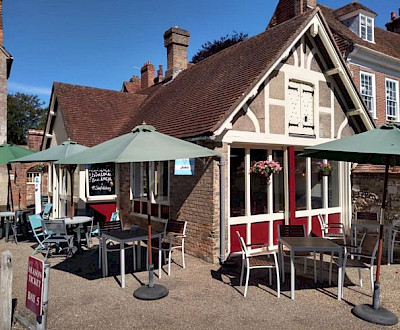
The Rifleman's Table

Enjoy a meal at the Rifleman's Table café in Salisbury Cathedral Close.  They have devised a special 2-course menu for the festival and the timings are planned to fit between the two concerts.  The menu is below and you will select your meal(s) when you check out.   If you are having a meal on Friday and Saturday evenings you can select different options each evening.   When you book you will be asked to inform us about any dietary requirements and allergies.


Menu

Main course options 

  • Chicken and leek pie with new potatoes and seasonal vegetables
  • Broccoli and feta quiche with new potatoes and green leaf salad (vegetarian)
  • Farm shop sausages with mash and onion gravy
  • Chicken in white wine sauce with basmati rice and green vegetables
  • Courgette and pea risotto with shaved parmesan (vegetarian)

Dessert options

  • Traditional sherry trifle
  • Lemon posset
  • Apple and blackberry crumble tart
  • Autumn mess (pavlova, berry compote and fresh berries)

Price per person £20.  We have a special offer of £50 for both evening concerts and the meal on the same evening, if booked online before September 1st.  You would also have reserved seats for the second concert.  Please note, this offer cannot be combined with the discounted price for 4 or 5 concerts.  

The café has an alcohol licence so you can buy drinks separately on the night.  

Please note this will only go ahead if we reach the minimum number of bookings required for each evening.  If we are not able to go ahead you will be told at least two weeks before the date of the concert and refunded the cost of the meal.  Equally spaces are limited so book early to avoid disappointment.

Please select your meal courses and then add your chosen meal to the basket. 


Enjoy a meal at the Rifleman's Table café in Salisbury Cathedral Close.  They have devised a special 2-course menu for the festival and the timings are planned to fit between the two concerts.  The menu is below and you will ...

Click here for further details.

The Sigh of Italy: Songs of Love and Lament
20.00–21.00
Medieval Hall
In this candlelit concert, Charlotte La Thrope (soprano), Hugo Hymas (tenor), Sergio Bucheli (lute) and Jacob Garside (viola da gamba) present a programme of music from Italy and France tracing a rich landscape of love, longing, and reflection, including works by Monteverdi and Caccini.

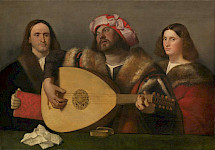
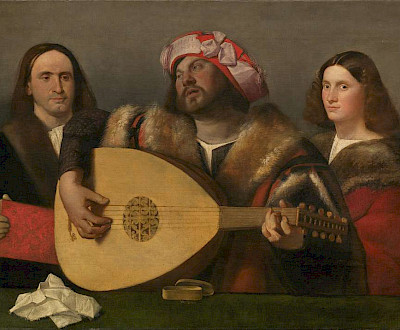
Cariani - a concert

Charlotte La Thrope (Soprano), Hugo Hymas (Tenor), Sergio Bucheli (Lute) and Jacob Garside (Viola da Gamba) bring together a programme of music from Italy and France at a moment when composers were exploring new ways to convey emotion and express the text with clarity and depth. The intimate songs of Giulio Caccini and Claudio Monteverdi reveal the immediacy and passion of this Italian style, while instrumental works by Francesco Rognoni add colour, ornamentation and virtuosity. Alongside these, music by Lassus, Sandrin, and D’Ambruys demonstrates how Italian expressive ideas inspired and shaped French music of the period. For soprano and tenor with lute and viola da gamba, this concert provides a journey through nuanced textures and finely wrought expression. It traces a rich landscape of love, longing, and reflection, inviting the listener to experience the subtle beauty and emotional depth of early Baroque music.


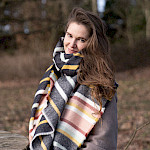
Charlotte La Thrope

Charlotte La Thrope (Soprano)

English soprano Charlotte La Thrope graduated with first-class honours in Music from Durham University, receiving the ‘Most Outstanding Soloist’ award, and later completed her studies at the Royal Academy of Music with distinction in 2018. She performs widely across Europe and South America, collaborating with acclaimed ensembles. Operatic roles include Susanna (The Marriage of Figaro), Pamina (The Magic Flute), Eurydice (Orfeo), Iris (Semele), L’Enfant (L’Enfant et Les Sortilèges), and Angel (Jephtha), praised as “poised, sweet and true.” Recently qualified as a psychotherapist, Charlotte balances her singing career with supporting others’ mental health.


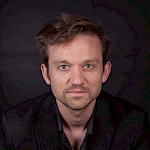
Hugo Hymas

Hugo Hymas (Tenor)

British tenor Hugo Hymas is acclaimed for his interpretations of baroque and renaissance repertoire.Recent engagements include Handel’s Solomon with OAE, Bach’s Magnificat with Le Poème Harmonique, Messiah with St Paul Chamber Orchestra, Haydn’s Armida in Potsdamer Winteroper, and Acis and Galatea with Vox Luminis. He also performs Stravinsky with The Façade Ensemble and explores 20th-century repertoire with Leicester International Music Festival. Hymas has appeared at Glyndebourne, Maggio Musicale Fiorentino, Teatro dell’Opera di Roma, and with ensembles including The English Concert, Arcangelo, Les Arts Florissants, and Collegium Vocale Gent. A former Britten Pears Young Artist, he studied Music at Durham University.


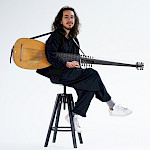
Sergio Bucheli

Sergio Bucheli (Lute)

Born in Mexico City, Sergio Bucheli began on classical guitar before moving to the UK to study at the Yehudi Menuhin School, supported by a Rolling Stones-funded bursary. In 2016, he received the ABRSM and Christopher Hogwood Scholarships to pursue undergraduate studies at the Royal Academy of Music with Elizabeth Kenny, focusing on lute, theorbo, and baroque guitar. A sought-after continuo player, he performs with The English Concert, La Nuova Musica, Arcangelo, the Irish Baroque Orchestra, Ensemble Marsyas, Early Opera Company, and Fretwork. An avid chamber musician, he frequently collaborates with Lawrence Power, Collegium Orchestra, and soprano Ruby Hughes.


Jacob Garside

Jacob Garside (Viola da Gamba)

London-based cellist and viola da gamba player Jacob Garside studied at the University of Bristol, the Royal Academy of Music, and the Royal College of Music with Jonathan Manson, Richard Boothby, and Reiko Ichise, supported by the Enlightenment and Hill Scholarships, and completed his Konzertexamen at Hochschule für Musik und Tanz Köln with Robert Smith. He performs with English Touring Opera, La Serenissima, OAE Education Orchestra, and Det Norske Blåseensemble, and has appeared with The English Concert, Academy of Ancient Music, and London Philharmonic Orchestra. A keen chamber musician, he co-founded The Hampstead Collective and the viol consort Republic of Viols, and performs in the contemporary opera The Faggots and Their Friends.


Charlotte La Thrope (Soprano), Hugo Hymas (Tenor), Sergio Bucheli (Lute) and Jacob Garside (Viola da Gamba) bring together a programme of music from Italy and France at a moment when composers were exploring new ways to convey emotion and express ...

Click here for further details.


Saturday 3 October 2026
Down Your Way
10.30–11.15
The Greater Good, Fovant
Nadder Baroque play music from around the British Isles in a pub near Salisbury.

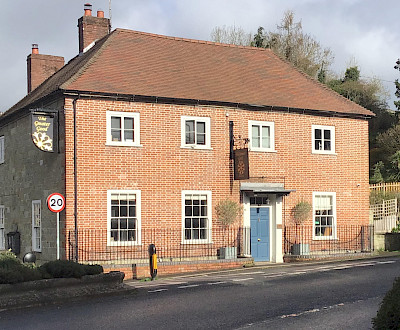
The Greater Good in Fovant

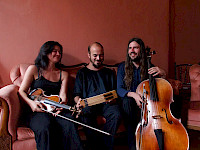
Nadder Baroque - two violins, a cello and a spinet - will bring baroque chamber music music from all around the British Isles to a pub near you. 

Much music in the British Isles in the 17th and 18th centuries was composed in London. This is hardly surprising with the influence in the capital city of the court, the church and the theatre. But there was a vigorous musical life around Britain and this will be highlighted in this concert.

Scottish, Irish and Welsh composers will be featured alongside a composer from Newcastle and even one born just a couple of miles down the road from the pub where we will be playing.

Violins: Lynn Menzies and Pauline Gallear, Cello: David Copus, Spinet: David Davies

This is a free event but places are limited.  Please reserve a place by following this link.  

Coffee and cake will be available to purchase at the pub after the concert.  

Nadder Baroque - two violins, a cello and a spinet - will bring baroque chamber music music from all around the British Isles to a pub near you. 

Much music in the British Isles in the 17th and 18th centuries ...

Click here for further details.

Madrigals of Love and Nature
10.30–11.15
Friends' Meeting House, Salisbury
The Halcyon Singers take us on a musical and poetic tour of the natural world and the not always happy realm of love.

The rustic concert - a song

The English madrigalists of the renaissance and baroque were obsessed with texts about love and nature. The Halcyon Singers take us on a musical and poetic tour of the natural world, and of the not always happy world of love. Nymphs and shepherds inevitably feature, as do birds and bees – and ever so many double entendres.

Coffee and cake will be served after the concert. 

This event is unticketed, with free entry and retiring collection for those who would like to make a contribution.

The English madrigalists of the renaissance and baroque were obsessed with texts about love and nature. The Halcyon Singers take us on a musical and poetic tour of the natural world, and of the not always happy world of love. ...

Click here for further details.

Bach and his Friends
12.30–13.15
All Saints' Church, Broad Chalke
Featuring violin, recorder, oboe, bassoon and harpsichord, this programme includes works by Bach and three people we know he admired: Stölzel, Telemann and Zelenka.

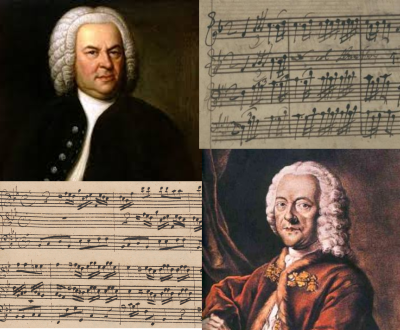
Bach, Telemann and manuscripts by Stölzel and Zelenka

We know Bach as composer of some of the most amazing music but who was he friends with and whose music did he admire? He performed music by Stölzel and Zelenka at Leipzig and Telemann was godfather to one of his sons. This concert brings together pieces for oboe, recorder, violin, bassoon and continuo by this remarkable group of contemporaries.

James Watts (baroque oboe), Miranda Dodd (baroque violin and recorder), Matthew Dodd (baroque bassoon) and Warwick Cole (harpsichord). 

This event is unticketed, with free entry and retiring collection for those who would like to make a contribution.

We know Bach as composer of some of the most amazing music but who was he friends with and whose music did he admire? He performed music by Stölzel and Zelenka at Leipzig and Telemann was godfather to one of ...

Click here for further details.

If Music be the Food of Love
12.30–13.15
St Thomas's Church
The Close Consort, with Abigail and Richard Hooper present songs, dances and consort pieces by 17th century English composers.

Close Consort logo

The Close Consort of recorders present a programme of songs, dances and consort pieces by 17th century English composers from William Byrd to Henry Purcell including Peter Philips, Robert Parsons and Anthony Holborne.

The Consort are joined by soprano and bass, Abigail and Richard Hooper to perform love songs including from John Dowland’s Books of Songs and Henry Purcell’s setting of Spenser’s poem, The Faerie Queene, amongst others.

This event is unticketed, with free entry and retiring collection for those who would like to make a contribution.

The Close Consort of recorders present a programme of songs, dances and consort pieces by 17th century English composers from William Byrd to Henry Purcell including Peter Philips, Robert Parsons and Anthony Holborne.

The Consort are joined by soprano and ...

Click here for further details.

The Musical Soul – the history of the violin bow
14.30–15.15
The Salisbury Museum
In this talk, our Patron, Margaret Faultless, explores the fascinating relationship between composers and instrumental technology by looking at the development of the violin bow.


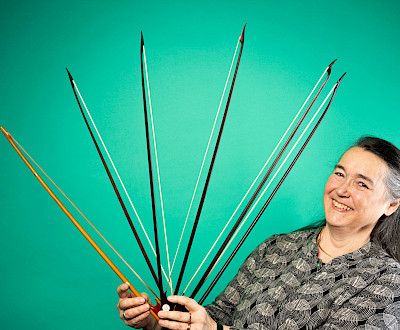
Margaret Faultless with 6 bows

The relation between composers and instrumental technology, is a chicken and egg question - which comes first? Composers developing, extending and changing the nature of musical expression or instrument and bow makers developing the technologies of instruments for performers to play. Maggie Faultless explores this fascinating relationship, discussing the changes in the violin bow (described as the soul of the music by many composers) over the centuries.

Violinist Margaret Faultless performs music from Monteverdi to the present day in a career that has included leading the contemporary music ensemble Aquarius, co-leading a West End Musical and The Scottish Ballet orchestra, and performing with ensembles such as the BBC Symphony Orchestra, the City of Birmingham Symphony Orchestra and the Academy of St Martin’s in the Fields. She has guest-led the Russian National Orchestra, the London Philharmonic Orchestra (London) and the Handel and Haydn Society (Boston). Now best known as a specialist in historical performance practice, she has held principal positions and performed with many of the best-known period instrument ensembles. As a leader of The Orchestra of the Age of Enlightenment she performs at the Proms, the South Bank, Glyndebourne and has toured all over the world.

A graduate and Honorary Fellow of Clare College, Cambridge, Musician in Residence at St John’s College and bye-fellow at Girton, she is the Artistic Director of the Cambridge University Collegium Musicum and of the University chamber music scheme (IAS), and works closely with the CMP. For 15 years Margaret was first Director of Performance at the Faculty of Music, a multi-faceted role which she helped to develop. She lectures and broadcasts on performance, her research interests including leadership and social interactions in Haydn symphonies and Bach's notation for performers.

She is the first Becket Chair of Historical Performance at The Royal Academy of Music, a Professor of the University of London and an Honorary Fellow of Birmingham Conservatoire, the city in which she grew up.

Photo courtesy of Zen Grisdale and the Orchestra of the Age of Enlightenment


The relation between composers and instrumental technology, is a chicken and egg question - which comes first? Composers developing, extending and changing the nature of musical expression or instrument and bow makers developing the technologies of instruments for performers ...

Click here for further details.

Cover Story
17.30–18.30
Medieval Hall
Blondel, a medieval and renaissance wind band, follow the spread of popular late medieval melodies across Europe, as they evolved over many decades.

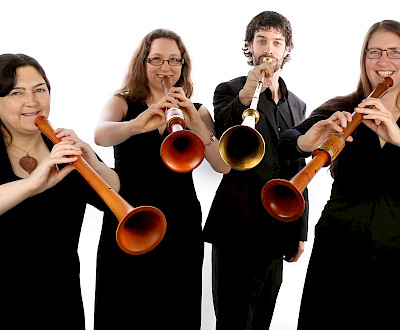
shawms, bagpipes, slide trumpet, sackbut, recorders & percussion

Belinda Paul, Emily Baines, Lizzie Gutteridge & Daniel Serafini

Works by Machaut, Dufay, Morton, Bedyngham, Josquin, Obrecht, Paumann & more
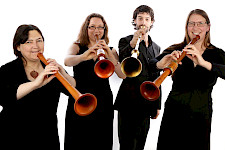
Blondel

Cover Story tracks connections between people, places, texts and music. It follows the spread of popular late medieval melodies across Europe, as they are copied, repurposed, and evolved over many decades.

What makes a song leap across national boundaries and language barriers, slip from the secular to the ecclesiastic, and remain at the top of the charts for more than 70 years? We don’t have the formula, but we know why these pieces wedged themselves into the cultural background of medieval Europe. The music is fabulous, and audiences today love it too.

“Absolutely FAB lovely music, great explanations”
“Fantastic concert a real joy to listen to such beautiful instruments played so well”
“They say there’s a first time for everything. This was our very first time to hear live Medieval music. And what a wonderful experience. Thanks for introducing us”

More information about Cover Story can be found on our website.

Blondel is a Medieval and Renaissance wind band. Our past performances include concerts in the Cheltenham Festival (broadcast live by the BBC), Cambridge Early Music, Brighton Early Music Festival, Trolhätten Early Music Festival, Wind Works Festival Iceland, King’s Lynn Festival, Medieval Music in the Dales, Beaminster Festival, Leeds International Medieval Congress, the Wimbledon International Music Festival, Totnes Early Music Society, Barnes Music Festival, Worcester Early Music Festival, and Colchester Early Music. We have worked, both individually and as a group, for the Globe Theatre.

We were commissioned by the Agincourt600 Committee to create a work to commemorate the 600th anniversary of the battle of Agincourt—Owre Kynge Went Forth – Henry V and the Battle of Agincourt – told in words and music.The project included a gala performance, and a recording, which is available as a free download from Bandcamp

Our current project, Cover Story, has been partly funded by the Continuo Foundation. A further grant from Angel Early Music has enabled us to record this programme. The album will be released later this year.

Belinda Paul studied oboe at the VCA (University of Melbourne.). She won a scholarship to study baroque, classical and romantic oboe in the Netherlands & France with Frank de Bruine, Ku Ebbinge and Marcel Ponseele.  She has performed and recorded with The Academy of Ancient Music, the Akademie für Alte Musik Berlin, Concerto Köln, La Stagione Frankfurt, and The Australian Chamber Orchestra. Her theatre work includes performances in St Petersburg’s Hermitage Theatre, and the Utrecht Festival.

As a medieval and renaissance specialist, she has worked with I Fagiolini, The Gabrieli Consort and Players, and taken part in a number of productions at the Globe Theatre and the National Theatre. She is a founding member of Blondel, with whom she has appeared in the Cheltenham Festival, King’s Lynn Festival, Cambridge Early Music, Wimbledon International Festival and on BBC Radio 3’s In Tune and Introducing.

Dr. Emily Baines is a professional recorder player, lecturer and musical director working throughout Europe also specialising in a variety of early woodwinds. She trained at the University of Hull, the Royal Conservatory (The Hague) and the Guildhall School of Music and Drama. Emily performs regularly for many period-instrument ensembles, contemporary groups, music festivals and theatres. Theatre work has included musician/musical director roles for, English Touring Theatre, Barbican BITE, the RSC, National Theatre and Shakespeare’s Globe, including the Globe’s Broadway transfers of Twelfth Night and Richard III. Her playing is regularly featured on Radio, TV and Film. In addition to performing, Emily is a Senior Lecturer in Music at Brunel University London, and is regularly invited to other institutions for lectures and practical workshops. Her first album as a soloist (with ensemble Amyas) ‘The Ghost in the Machine’, was released in October 2021 with First Hand Records, and a new album ‘Cover Story’ with Blondel is due for release later in 2026.

Lizzie Gutteridge plays a wide range of historical instruments, including bagpipes, recorders, curtals and fiddles. She is a member of Blondel, The York Waits and the New Cambridge Waits, and musical director of the Colchester Waits. Freelance engagements have included the Globe's “Nell Gwynn” & “The Knight of the Burning Pestle”, with Passamezzo in Morocco and London. TV appearances include “Thronecast – Gameshow of Thrones” to “A Merry Tudor Christmas with Lucy Worsley”, and live & recorded performances on bagpipe of Gregory Rose’s “Dance Macabre”. Lizzie’s solo project “Consort of 1” combines early music with the use of live looping, allowing layering of parts to throw a new light on Medieval and Renaissance melodies. Her latest project “A musical Illiad” combines ancient and improvised music on aulos and lyres with live storytelling by Clare Goodall.

Daniel Serafini is a Luxembourg-based trombonist, sackbut player and educator whose work connects early music, contemporary repertoire and teaching. A professor at the Conservatoire du Nord in Luxembourg, Daniel is recognised for his thoughtful and highly individual approach to sound. At the centre of his musical practice is the belief that differences in timbre are the foundation of music. This artistic vision is closely linked to deep listening, body awareness and yoga, which all inform his relationship to breath, resonance and presence in performance.

Alongside his teaching, Daniel regularly performs with ensembles including the Freiburger Barockorchester, B’Rock Orchestra, Ensemble Pygmalion, Gabrieli Consort, United Instruments of Lucilin, Bondel and Ensemble Seraphim. His career reflects a rare versatility, moving naturally between historical performance and contemporary expression, always with a focus on colour, sensitivity and exploration. Through both performance and pedagogy, Daniel brings a refined ear and a distinctive musical voice to every project.
shawms, bagpipes, slide trumpet, sackbut, recorders & percussion

Belinda Paul, Emily Baines, Lizzie Gutteridge & Daniel Serafini

Works by Machaut, Dufay, Morton, Bedyngham, Josquin, Obrecht, Paumann & more

Cover Story tracks connections between people, places, texts and music. It follows ...

Click here for further details.

Meal at the Rifleman's Table - Saturday
18.45–19.45
Rifleman's Table, The Close, Salisbury
Book a 2-course meal at the Rifleman's Table café

The Rifleman's TableEnjoy a meal at the Rifleman's Table café in Salisbury Cathedral Close.  They have devised a special 2-course menu for the festival and the timings are planned to fit between the two concerts.  The menu is below and you will select your meal(s) when you check out.   If you are having a meal on Friday and Saturday evenings you can select different options each evening.   When you book you will be asked to inform us about any dietary requirements and allergies.


Menu

Main course options 

  • Chicken and leek pie with new potatoes and seasonal vegetables
  • Broccoli and feta quiche with new potatoes and green leaf salad (vegetarian)
  • Farm shop sausages with mash and onion gravy
  • Chicken in white wine sauce with basmati rice and green vegetables
  • Courgette and pea risotto with shaved parmesan (vegetarian)

Dessert options

  • Traditional sherry trifle
  • Lemon posset
  • Apple and blackberry crumble tart
  • Autumn mess (pavlova, berry compote and fresh berries)

Price per person £20.  We have a special offer of £50 for both evening concerts and the meal on the same evening, if booked online before September 1st.  You would also have reserved seats for the second concert.  Please note, this offer cannot be combined with the discounted price for 4 or 5 concerts.  

The café has an alcohol licence so you can buy drinks separately on the night.  

Please note this will only go ahead if we reach the minimum number of bookings required for each evening.  If we are not able to go ahead you will be told at least two weeks before the date of the concert and refunded the cost of the meal.  Equally spaces are limited so book early to avoid disappointment.  

Enjoy a meal at the Rifleman's Table café in Salisbury Cathedral Close.  They have devised a special 2-course menu for the festival and the timings are planned to fit between the two concerts.  The menu is below and you will select ...

Click here for further details.

Tartini and the School of Nations
20.00–21.00
Medieval Hall
Nocturnalia’s programme explores the transcendent figure of Giuseppe Tartini, revolutionary teacher, virtuoso violinist, theorist, and composer of the Enlightenment.

Nocturnalia

Nocturnalia’s programme explores the transcendent figure of Giuseppe Tartini, revolutionary teacher, virtuoso violinist, theorist, and composer of the Enlightenment, whose musical and pedagogical influence continues to resonate.

Tartini founded the Scuola delle Nazioni (School of Nations) in Padua, where he trained generations of musicians from across Italy and Europe. Alongside his compositional career, he conducted pioneering experiments in acoustics and became a leading musical theorist. A prolific composer, Tartini laid the foundations of the galant style, bridging Baroque and Classical idioms. His works often drew inspiration from poetry, and even, dreams.

The program traces Tartini’s European legacy through his students, from Nardini to Stratico, including Pugnani and Sirmen, highlighting the international reach of the Scuola delle Nazioni. Through violin, harpsichord, and cello, these works blend melodic elegance, expressive affetti, and rich harmonic invention to move both heart and senses.

Continuo Foundation logo

We are grateful to the Continuo Foundation for their support for this concert.  


Nocturnalia Ensemble is a trio dedicated to historical performance, blending rediscovered repertoire, folk influences, and innovative programming. Our concerts create a dynamic dialogue between past and present, reviving the emotions of forgotten sounds and forging a deep connection with the audience.

We view Early Music as profoundly contemporary, embracing the freedom of improvisation and ornamentation. Our approach is shaped by our European roots and the cultural concepts that define us: Šarovít (colorful and picturesque), Duende (the creative struggle to evoke deep art), and Μεράκι (to do something with soul).

Formed during late-night sessions at the Romanesque Abbey of Ambronay in 2021 through the EEEmerging+ European Academy, Nocturnalia gave its debut concert in Athens in 2023. Subsequent appearances include the Utrecht Oude Muziek Festival, Contratemps Festival (Barcelona), Tartini Festival (Ljubljana), Chios Music Festival, and tours in Slovenia.

Selected for the BREMF Live! Scheme 2024–25 and the prestigious S-EEEmerging 2026–2027 programme, the ensemble has been supported through residencies and concerts across Europe. Upcoming and recent performances include BBC3, Torroella Festival, Helsinki Baroque Orchestra, Festival Baroque de la Tarentaise, Brighton Early Music Festival, the Foundling Museum, Salisbury Early Musick, and the Festival dei Giovani Musicisti Europei (Academia Montis Regalis).

Mojca Jerman – Violinist
 Mojca Jerman specializes in Baroque and Classical music and is a recipient of the Premio Nazionale delle Arti. She performs across Europe and the Americas with ensembles including Insula Orchestra, Anima Eterna, and Frau Musika.

Pablo Tejedor-Gutiérrez – Cello & Viola da Gamba
 Pablo performs on historical cello and viola da gamba with ensembles such as Holland Baroque, Instruments of Time and Truth, Academia Montis Regalis, and Ensemble Mare Nostrum. He is also an active researcher and teacher at the Royal College of Music and the University of Oxford.

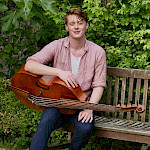
Alex Mastichiadis – Harpsichord & Organ
 Alex specializes in 17th–18th century repertoire and historical performance. In addition to solo and ensemble work with groups like Armonia Atenea, he explores contemporary sound art with MMMD and teaches clavichord at the Royal Conservatoire The Hague.

Nocturnalia’s programme explores the transcendent figure of Giuseppe Tartini, revolutionary teacher, virtuoso violinist, theorist, and composer of the Enlightenment, whose musical and pedagogical influence continues to resonate.

Tartini founded the Scuola delle Nazioni (School of Nations) in Padua, where he ...

Click here for further details.


Sunday 4 October 2026
Salisbury Cathedral Services - Mattins
09.15–10.15
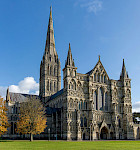
Salisbury Cathedral
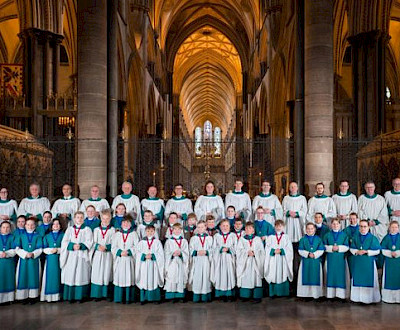
As part of the Salisbury Musick festival, the cathedral will include early music in the three services on Sunday 4th October.

Come along to Mattins at 9.15am to hear the Cathedral Choir singing music from the period.  Details of the music being included will appear about a fortnight before the festival on the Salisbury Cathedral website.  

Come along to Mattins at 9.15am to hear the Cathedral Choir singing music from the period.  Details of the music being included will appear about a fortnight before the festival on the Salisbury Cathedral website.  

Click here for further details.

Discovering Early Music – Playing with History
10.15–12.45
The Salisbury Museum
This baroque string workshop with Nocturnalia will look at historically informed performance, tailored for players of modern string instruments who would like to explore baroque music in a more stylistic way.

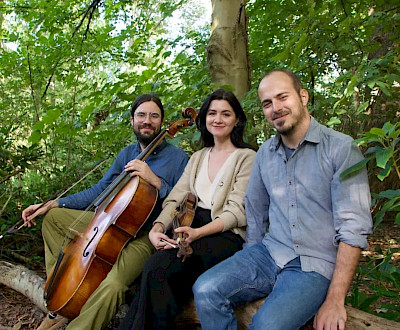
Nocturnalia

This workshop offers an in-depth exploration of Nocturnalia Ensemble's approach to chamber music and historically informed performance, tailored for players of modern string instruments who would like to explore Baroque music in a more stylistic way. 

The workshop will focus on ensemble coaching looking at stylistic awareness, improvisation, and technical guidance, all adapted for modern instruments tuned to A=440. Topics will include organology, performance practices, historical analysis, continuo (using a small spinet provided), ornamentation, and the differences between modern and historical playing.

This workshop is aimed at string teachers and competent, regular players aged 18 and over.  Participants will be able to borrow a baroque bow.  Music will be provided on the day.  Please bring a music stand.  

Continuo Foundation logoWe are grateful to the Continuo Foundation for their support of this workshop.
Thanks to a generous private donation we are able to offer places for players at the reduced price of £5.  There are a few 'observers' tickets available at £10.  

This workshop offers an in-depth exploration of Nocturnalia Ensemble's approach to chamber music and historically informed performance, tailored for players of modern string instruments who would like to explore Baroque music in a more stylistic way. 

The workshop will focus ...

Click here for further details.

Made in England
10.30–12.00
The Salisbury Museum
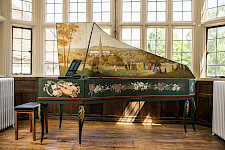
For anyone visiting the museum, David Davies will be playing the harpsichord in the King’s Room.

Harpsichord

David Davies will be playing the harpsichord in the King's Room at The Salisbury Museum between 10.30 and 12.00 on Sunday 4th October.  Entry for this is free to those who are visiting the museum.  Tickets for the museum are available on The Salisbury Museum website.   


David Davies will be playing the harpsichord in the King's Room at The Salisbury Museum between 10.30 and 12.00 on Sunday 4th October.  Entry for this is free to those who are visiting the museum.  Tickets for the museum are ...

Click here for further details.

Salisbury Cathedral Services - Eucharist
10.30–11.30
Salisbury Cathedral
As part of the Salisbury Musick festival, the cathedral will include early music in the three services on Sunday 4th October.

Come along at 10.30am to hear the Cathedral Choir singing music from the period in the Eucharist service.  Details of the music being included will appear about a fortnight before the festival on the Salisbury Cathedral website.  

Come along at 10.30am to hear the Cathedral Choir singing music from the period in the Eucharist service.  Details of the music being included will appear about a fortnight before the festival on the Salisbury Cathedral website.  

Click here for further details.

Salisbury City Musick Tour
12.00–13.30
Start at Salisbury Cathedral West Door
This guided walk will explore sites linked to notable people, performers and events within the Salisbury music community in the 18th century.

Salisbury Cathedral West EndA 1 1/2 hour guided walk exploring sites linked to notable people, performers and events within the Salisbury music community in the 18th century, especially when the Musick festivals took place in the city. The walk will start outside the west front of Salisbury Cathedral and finish in the marketplace. Sonja Mawdsley, a local Blue Badge Guide, is looking forward to making the connections between the stories of that period and the places we see now.
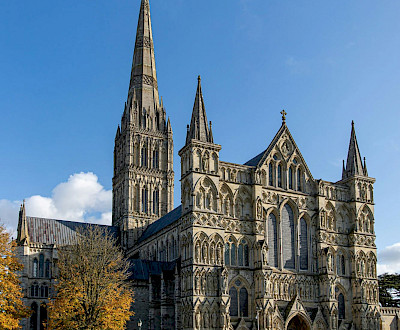
A 1 1/2 hour guided walk exploring sites linked to notable people, performers and events within the Salisbury music community in the 18th century, especially when the Musick festivals took place in the city. The walk will start outside the ...

Click here for further details.

Venice – Crucible of Culture
15.00–16.00
Medieval Hall
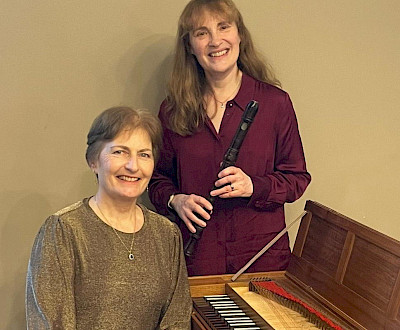
Early Bird, featuring Rebecca Prosser (recorder) and Sharon Gould (harpsichord) explore music composed in Venice from the 15th to the 18th century.

Photo of Sharon Gould and Rebecca ProsserEarly Bird, featuring Rebecca Prosser (recorders) and Sharon Gould (harpsichord) will explore music composed in Venice, from the 15th to 18th century, showing how Venetian styles both influenced Northern European compositions and were inspired by them.
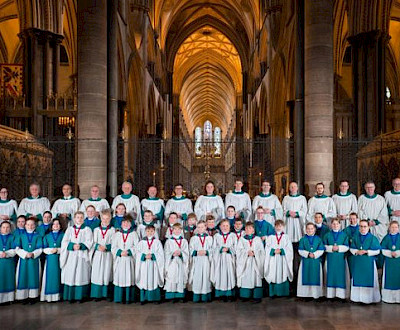
Highlights include settings by Jacob van Eyck and by Marco Uccellini of the folksong Questa dolce sirena, the anonymous chanson J'ay pris amours that was popular all around Europe, and Early Bird's own arrangement of the Concerto in D from L'Estro Armonico by Vivaldi. Also featuring music from Handel's Agrippina, composed and performed in Venice and his first major European success.

Rebecca Prosser studied as a scholar at the Royal College of Music. She has performed with many of the leading period instrument groups, including Florilegium and The English Concert, touring with them in Europe and the Far East. She has taken part in numerous recordings and can be heard on the sound-tracks of ‘Harry Potter and the Prisoner of Azkaban’ and the 2015 film of ‘The Man from U.N.C.L.E’. Having taught Recorder at the Royal Welsh College of Music and Drama and Bristol University, Rebecca now enjoys a private teaching practice at home. She is an examiner for the ABRSM, touring throughout the UK and Internationally. She is regularly invited to be the external specialist adjudicator for internal exams and prizes at the Royal College of Music and Birmingham Conservatoire. Aside from her musical life, Rebecca’s passions include ballet, running and working on her allotment with her cat, Flora.

Sharon Gould discovered Bach and The Beatles at the same time, aged 8. Fascinated by the syncopated rhythms of both, and sad at being unable to join the latter as keyboard player, she took harpsichord lessons and formed her own Baroque orchestra five years later. This enterprising start led to an invitation to be the first music student at Churchill College, Cambridge, from where she founded and directed ‘The Vivaldi Players’. She has since conducted many orchestras and ensembles, often directing from the keyboard. Solo performances include concertos and recitals at the Wigmore Hall, Purcell Room and Queen Elizabeth Hall. Tours, TV, radio and recording work have taken her around Europe and America. She has taught at the R.C.M Junior Department, Chetham’s Music School and the R.N.C.M in Manchester. As a soprano, Sharon is a member of the Salisbury Cathedral Chamber Choir and the six-voice singing group ‘Skylarks’.

Early Bird, featuring Rebecca Prosser (recorders) and Sharon Gould (harpsichord) will explore music composed in Venice, from the 15th to 18th century, showing how Venetian styles both influenced Northern European compositions and were inspired by them.

Highlights include settings by ...

Click here for further details.

Salisbury Cathedral Services - Choral Evensong
16.30–17.30
Salisbury Cathedral
As part of the Salisbury Musick festival, the cathedral will include early music in the three services on Sunday 4th October.

Come along to Evensong at 16.30pm to hear the Cathedral Choir singing music from the period in the Choral Evensong service.  Details of the music being included will appear about a fortnight before the festival on the Salisbury Cathedral website.  

Come along to Evensong at 16.30pm to hear the Cathedral Choir singing music from the period in the Choral Evensong service.  Details of the music being included will appear about a fortnight before the festival on the Salisbury Cathedral website.   ...

Click here for further details.

Handel’s Messiah Gala concert
18.00–21.00
St Thomas's Church
The Farrant Singers and Salisbury Baroque, directed by Philip Lawson, perform Handel’s magnificent Messiah on period instruments, with Charlotte La Thrope, Sarah Denbee, Hugo Hymas and William Drakett as soloists.

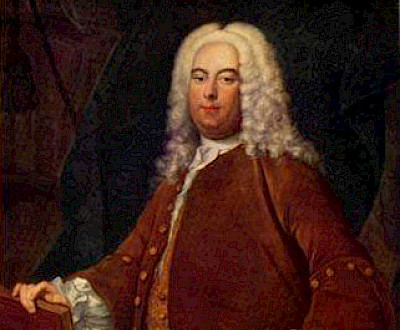
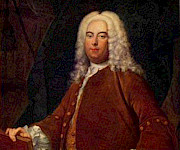
Portrait of HandelHandel composed this magnificent oratorio in 1741 and it was first performed in Dublin in 1742.  It was one of the most frequently performed works in the eighteenth century festivals in Salisbury so is a fitting way to conclude this year’s festival.  Directed by Philip Lawson, the Farrant Singers and Salisbury Baroque (leader Alice Poppleton) will be joined by Charlotte La Thrope (soprano), Sarah Denbee (alto), Hugo Hymas (tenor) and William Drakett (bass).
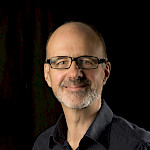
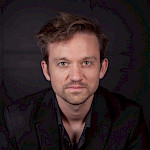
Philip LawsonPhilip Lawson (conductor)

For 18 years Philip Lawson sang baritone with The King’s Singers, replacing founder-member Simon Carrington in 1993, and performing over 2,000 concerts worldwide, recording many CDs and DVDs, and co-leading hundreds of choral workshops. For most of that time he was also the group’s principal arranger, contributing more than 50 arrangements to the repertoire, including 10 for the 2008 CD “Simple Gifts” which went on to win the GRAMMY for Best Classical Crossover Album in 2009. Prior to this Philip was Director of Music at Chafyn Grove school in Salisbury, and a Lay Clerk in the cathedral choir, and before that worked in London with all the major professional choirs, including the BBC Singers, The Sixteen, St. Paul's Cathedral and Westminster Abbey. He now divides his time between choral conducting, teaching and composing/arranging, and has a catalogue of over 300 published titles. www.philiplawson.net

Charlotte La ThropeCharlotte La Thrope (soprano)

English soprano Charlotte La Thrope graduated with first-class honours in Music from Durham University, receiving the ‘Most Outstanding Soloist’ award, and later completed her studies at the Royal Academy of Music with distinction in 2018. She performs widely across Europe and South America, collaborating with acclaimed ensembles. Operatic roles include Susanna (The Marriage of Figaro), Pamina (The Magic Flute), Eurydice (Orfeo), Iris (Semele), L’Enfant (L’Enfant et Les Sortilèges), and Angel (Jephtha), praised as “poised, sweet and true.” Recently qualified as a psychotherapist, Charlotte balances her singing career with supporting others’ mental health.

Sarah DenbeeSarah Denbee (alto)

Sarah gained a First in Music and Italian from the Universities of Bristol and Bologna, and a Masters with Distinction from Trinity Laban Conservatoire.
She was a member of the Glyndebourne Opera Chorus for several years, and previous highlights have been singing in the semi-chorus in the world premiere of Brett Dean's 'Hamlet', as well as covering several roles at Glyndebourne. She has worked at the Royal Opera House, Scottish Opera and The Grange Festival, as well as many other opera companies. Sarah has been a step-out soloist with the Constellation Orchestra, English Baroque Soloists, Scottish Chamber Orchestra, English Symphony Orchestra, Orchestra of the Age of Enlightenment, Academy of Ancient Music and London Symphony Orchestra, and has performed in prestigious venues around the world. She also sang at the Coronation of King Charles III & Queen Camilla with the Choir of Westminster Abbey, the first time female singers were included in such an occasion.

Hugo HymasHugo Hymas (tenor)

British tenor Hugo Hymas is acclaimed for his interpretations of baroque and renaissance repertoire. Recent engagements include Handel’s Solomon with OAE, Bach’s Magnificat with Le Poème Harmonique, Messiah with St Paul Chamber Orchestra, Haydn’s Armida in Potsdamer Winteroper, and Acis and Galatea with Vox Luminis. He also performs Stravinsky with The Façade Ensemble and explores 20th-century repertoire with Leicester International Music Festival. Hymas has appeared at Glyndebourne, Maggio Musicale Fiorentino, Teatro dell’Opera di Roma, and with ensembles including The English Concert, Arcangelo, Les Arts Florissants, and Collegium Vocale Gent. A former Britten Pears Young Artist, he studied Music at Durham University.

Willian DrakettWilliam Drakett (bass)

William Drakett studied singing under Prof. Konrad Jarnot at the Robert Schumann Conservatoire in Düsseldorf, following organ and harpsichord studies at the Royal Birmingham Conservatoire. He has performed on the stage in a range of operatic roles and is in demand as a concert soloist in England and Germany in works including Elijah (Mendelssohn), Dream of Gerontius (Elgar), St. John Passion, St. Matthew Passion, Christmas Oratorio & B Minor Mass (Bach), A German Requiem (Brahms), Five Mystical Songs (Vaughan Williams), Requiem (Mozart, Fauré & Duruflé) and In Terra Pax (Martin).  He now lives in Wells where he is a Vicar Choral in the choir of Wells Cathedral, and Head of Vocal & Choral Studies at Wells Cathedral School.

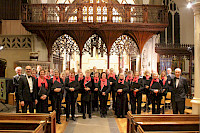
photo of The Farrant SingersThe Farrant Singers is the longest-established chamber choir in Salisbury, with close links to the medieval city, the surrounding Wiltshire villages and the Cathedral, where the choir occasionally sings at services.  It was founded in 1958 by composer and organist Richard Lloyd, initially to give performances of church music in the diocese. Conductors since then have included Mark Deller, Richard Shephard, David Halls, Colin Howard, Daniel Cook and Andrew Mackay, with Philip Lawson taking over the baton in 2021. The group currently comprises around 35 singers and its repertoire includes a wide range of sacred and secular music. Concerts are given in Salisbury and in smaller venues around the region, and the choir occasionally sings further afield in the UK and Europe.
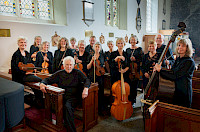
photo of Salisbury BaroqueSalisbury Baroque is Salisbury’s only period-instrument orchestra. It was set up by our founding patron David Morgan to enable local players (and some colleagues from further afield) to share their passion for late 17th and 18th century music through concerts and workshops.  Using copies of instruments of the period and authentic playing style, the group is able to bring to its audience a sense of intimacy and style difficult to achieve with larger forces and modern, heavier instruments.
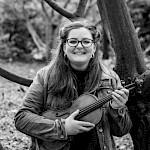
 

Alice PoppletonAlice Poppleton (leader)

Alice enjoys a busy freelance life as a violinist, viola player and workshop leader. After three wonderful years at Bristol University, Alice completed post-graduate studies with distinction as Scholar at both The Royal Welsh College of Music and Drama and The Royal Academy of Music (under the tutelage of Rachel Podger). Alice loves the rich tapestry of creative projects in her life: performing and touring with The English Concert, The Gabrieli’s and The Orchestra of the Age of Enlightenment; designing and presenting children’s videos and concerts for The OAE, Handel Hendrix House and Brighton Early Music Festival; and collaborative composition projects for the Royal Academy of Music and English National Opera (performed at The Royal Albert Hall). Alice is the co-founder and Director of Thinking Music, a charity which connects rural primary schools and universities delivering a year-long programme to make music together. Alice enjoys folk fiddling and taking to the great outdoors (keeping the sheep out of the loop about her ever-growing gut string collection). Alice has recently returned from a tour to America with The English Concert which culminated in a performance at the Carnegie Hall – a career highlight!  Alicepoppleton.com

Handel composed this magnificent oratorio in 1741 and it was first performed in Dublin in 1742.  It was one of the most frequently performed works in the eighteenth century festivals in Salisbury so is a fitting way to conclude this ...

Click here for further details.